Not far from Huanchaco are some amazing ruins, including Chan Chan, the largest pre-Incan city in South America and two large temples, the Huaca de la Luna and Huaca del Sol. Chan Chan covers 8 square miles and is still being excavated, however, tours are offered in a partially restored palace on site which was a large maze of intricate, adobe sculptures and towering, defensive walls.
As my guide, the two locals in our group and I were leaving the ruins, a group of 30 or more local middle school students from an all girls academy were walking in. One of them grabbed my shirt and insisted on taking a picture with me, which led to a frenzy as all of them fought for five minutes to get their picture taken with me too. Even the teacher got in on the photo shoot! By the time I got my camera out and turned it back on them, they had all ran away, suddenly embarrassed. Probably the closest I'll ever be to bring famous...
I left Chan Chan and headed to the other major ruins for a free tour of the enormous temple. Somehow, I ended up in another all girl school group again, though it appeared my five minutes of fame was up, thankfully.
Original wall painting at Huaca de la Luna. This 4' x 4' design has not been restored in any way, pretty amazing!
This detailed painting was part of an intricate design covering a five story exterior wall.
Perhaps more interesting to me than even the ruins was the public transport getting from Huanchaco to Trujillo to the ruins and back. Wanting to avoid comparatively expensive taxis, I've gotten quite comfortable taking buses everywhere, though with mixed success. From Huanchaco to Chan Chan, the bus costs 1.5 soles or 50¢ and is pretty straightforward. The bus is a 20 foot long beater that chugs slowly along, making frequent stops wherever people are waiting alongside the road. There are no set bus stops and no other foreigners onboard.
From Chan Chan to Trujillo, the major city where I ate lunch, I managed to take a similar looking bus, get completely off route and ended up jumping off and into a taxi to get the main Plaza de Armas, a charming mix of colonial architecture and dinghy casinos.
Didn't realize The Excalibur had gone international... Think I'll stick to Vegas!
After getting to the Huaca del Sol by taxi, I took a collectivo back to Trujillo where I hoped to catch a bus. A collectivo is basically a van that operates as a mini bus along a set route that may not have enough traffic to warrant taxis or needs a bus more than every 15 minutes. With a driver up front and an assistant sitting in the back yelling the route out the window to passersby, collecting fare and opening the sliding door to let people on and off, there is nothing in America that compares.
A typical collectivo. At one point on the way back from the Huaca del Sol, including the driver, assistant crouching on the floor and children on their parents' laps, there were 24 people in our van! Seat belts? Max capacity? Some concepts we take for granted don't translate as well as others.
Leaving the collectivo, I got on a bus along the Hunachaco route, though 20 minutes in, I realized it was headed the opposite direction I needed. Locals yelling and pointing at another bus, I jumped from the moving bus, dodging cars in the stalled traffic going the other way and hopped into the bus I needed, finally arriving home after dark. All in a day's travel in Peru!
Monday, June 9, 2014
Hola Huanchaco
Travel days are often the most difficult for the solo wanderer. Walking down the street carrying all of your belongings on your back with no goodbye, no "see you later" and no company for the dusty walk to the bus station. But the squalid conditions of my lodging at Chicama were something I was glad to have in my rearview mirror. Besides, today was different. Mema and Maria Julia were there to send me off with a hug and a kiss the cheek, giving today's departure a much warmer feel. I had befriended the two chatty eighty year old women over the last several days as I bought a banana, homemade cookie and bottled water at their "bodega" each morning for breakfast.
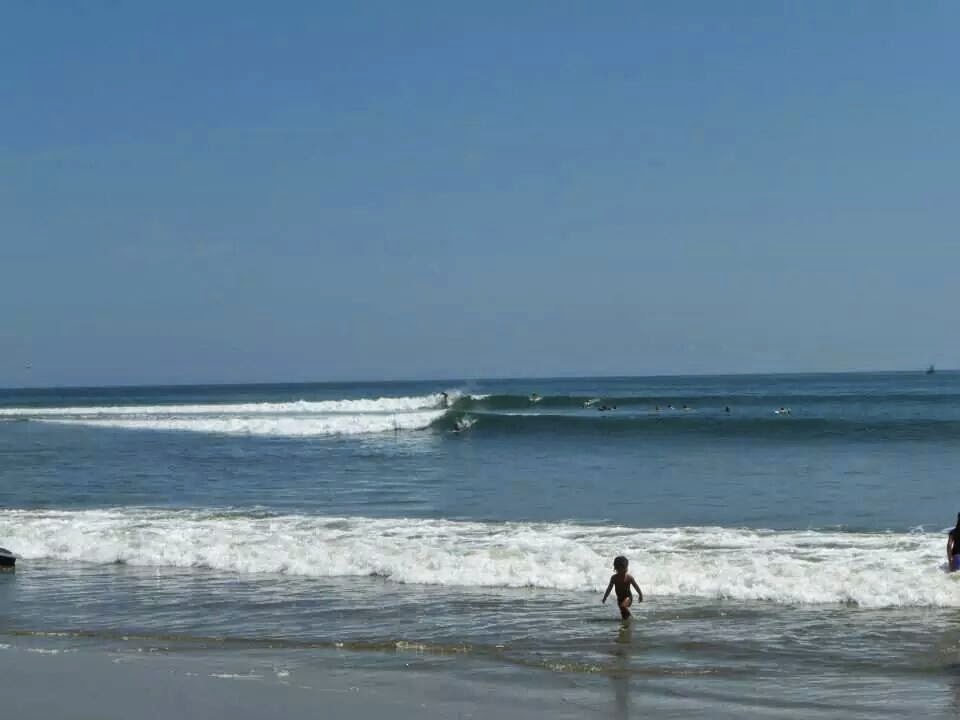
The day was also different as I felt something I had never felt before and probably never will again; I was bored with surfing perfect waves all day, every day.
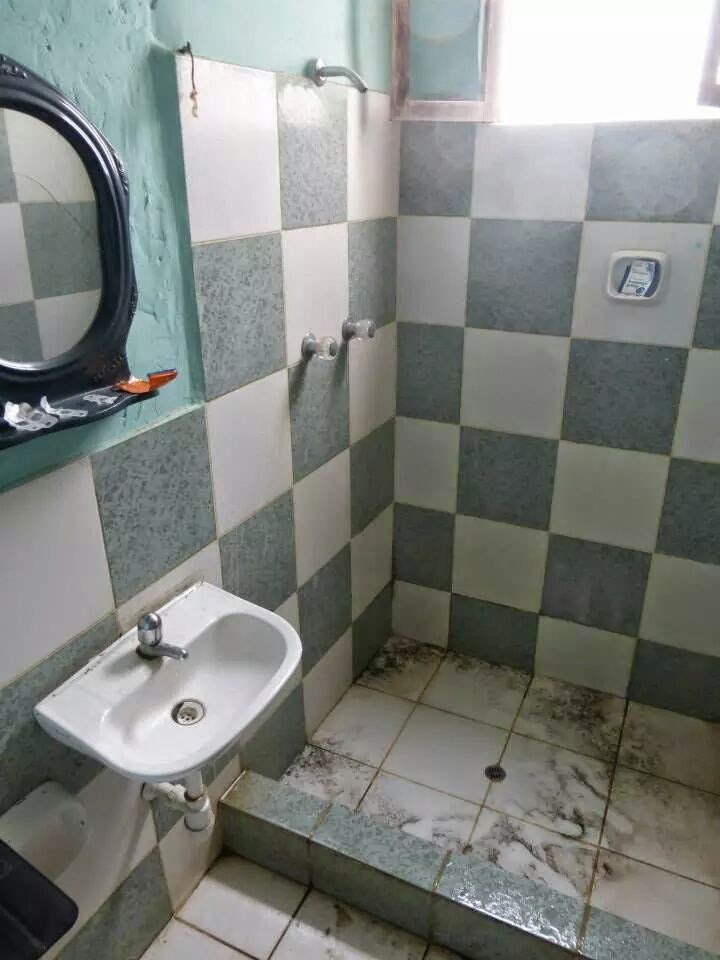
Sink falling off the wall, no shower head, cracked mirror, filthy floor and no shower curtain to keep the place from getting soaked every time you "hosed off" it was easy to say goodbye to this gem of a place...
Fortunately, my next stop in Huanchaco is on the well-worn gringo trail and despite my hostel being 50 feet from the ocean, I did not get wet once in four days. It was refreshing to meet other young backpackers and swap stories from the road over a few beers.
Besides tourism, the town's economy is also fueled by fishing and many locals still use the same boat technology that was perfected thousands of years ago. Each afternoon, a dozen of these rafts would take off beyond the surf, fishing for corvina, octopus, shrimp, and squid before riding the waves back into shore. Some argue that the first surfers were not actually Hawaiians but the Huanchacans standing on their reed rafts.
While in Huanchaco, there was also some sort of celebration that wasn't explained very well but nonetheless it was pretty cool seeing this group of military academy cadets parading down the street. A local school teacher handed me a Peruvian flag and I joined the patriotic fervor, not having the slightest idea why.
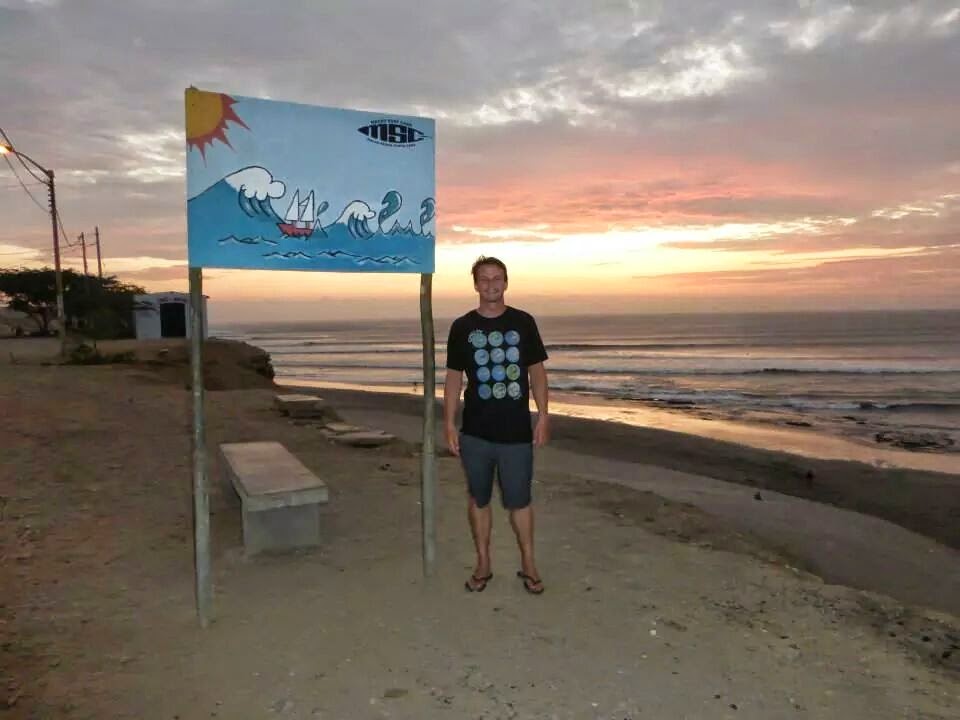
On a completely unrelated note, I have been working on growing a mustache the last couple weeks. Here's my best "blue steel" before I shave it off...
The day was also different as I felt something I had never felt before and probably never will again; I was bored with surfing perfect waves all day, every day.
Sink falling off the wall, no shower head, cracked mirror, filthy floor and no shower curtain to keep the place from getting soaked every time you "hosed off" it was easy to say goodbye to this gem of a place...
Fortunately, my next stop in Huanchaco is on the well-worn gringo trail and despite my hostel being 50 feet from the ocean, I did not get wet once in four days. It was refreshing to meet other young backpackers and swap stories from the road over a few beers.
Besides tourism, the town's economy is also fueled by fishing and many locals still use the same boat technology that was perfected thousands of years ago. Each afternoon, a dozen of these rafts would take off beyond the surf, fishing for corvina, octopus, shrimp, and squid before riding the waves back into shore. Some argue that the first surfers were not actually Hawaiians but the Huanchacans standing on their reed rafts.
While in Huanchaco, there was also some sort of celebration that wasn't explained very well but nonetheless it was pretty cool seeing this group of military academy cadets parading down the street. A local school teacher handed me a Peruvian flag and I joined the patriotic fervor, not having the slightest idea why.
On a completely unrelated note, I have been working on growing a mustache the last couple weeks. Here's my best "blue steel" before I shave it off...
Tuesday, June 3, 2014
Chicama: The Good and the Ugly
Imagine you're at Disneyworld, not just regular old Disneyland, but Disneyworld, literally the happiest place on earth. You're patiently waiting in line to go on the most amazing ride you've ever been on yet every time it's your turn, six people cut in front of you, leaving you to wait for the next one to come through. This goes on for twenty minutes till you finally get a seat, not the best seat but its still an exhilerating ride. This goes on at every attraction, all day long.
Welcome to Chicama. As arguably the longest wave on earth, those too weak or too lazy to walk or paddle back to the peak after a long ride and willing to spend a few bucks, are scooped up into one of a few zodiacs buzzing the water only to be dropped back off at the top of the point, deeper than the rest if us doing it the old fashioned way. When a set comes, the boaters are deeper on the wave and thus in position to have right of way for the entirety of the ride. Several boats even cut straight through the surfers battling against the strong current and drop guys off perfectly timed with sets so that they guarantee the best waves.
But this is worse than cutting in line at Disneyworld, as the boats not only break the unwritten yet universal code of line-up etiquette, they go against the essence of surfing itself. Surfing is a way of life, much more than a sport or the simple act of riding a wave. What makes it so rewarding is all the hours spent looking at swell charts, driving around checking each spot, traveling great distances, learning how to read a wave, acquiring tribal knowledge, waiting for the tide to drop, and paddling against the elements only to finally arrive in that perfect spot at the perfect moment to get a fleeting ride on a wall of moving water that was generated by a storm thousands of miles away. To boat through the surf skipping so much of this process, creating wakes that ruin the waves, bypassing the surfers struggling to stay in position and selfishly claiming each wave as "mine", couldn't be further from what surfing makes surfing such a beautiful way of life.
One of surfing's great lessons is "just because you can, doesn't mean you should." We're an infinite number of people all fighting for a finite number of waves. Restraint, grace and humility are as much a part of surfing as actually riding a wave and are virtues that carry on into the rest of our lives. The boaters may need a refresher course.
But I digress from my rant. For a strong paddler and someone willing to spend endless hours in the water, the boats are frustrating but certainly not enough to ruin a great wave. Chicama is actually an interesting study of all the various people that surf from around the world, from the two week vacationers paying a couple hundred dollars per night at the resort on the cliff, to the slummers like me paying less than ten a night a couple hundred yards down the road.
This is about 1/4 of the wave as it peels down the point. On an all time day, rides of over four minutes are possible.
The coast here is extremely hot, dry and windy. The land above the point is completely devoid of plant life giving it an almost Martian appearance.
I've been in the water at least four hours every day but yesterday was a marathon session from 1 to 6 with just a quick sunscreen and water break somewhere in the middle. Even boatloads of kooks couldn't wipe the look of pure happiness and exhaustion off my face!
Disclaimer: Though my audience is almost entirely non-surfers, I have intentionally avoided naming waves or towns near waves and posting photos that might hint where I am, though Chicama is such a circus, I did not feel it needed nor deserved such protection.
Welcome to Chicama. As arguably the longest wave on earth, those too weak or too lazy to walk or paddle back to the peak after a long ride and willing to spend a few bucks, are scooped up into one of a few zodiacs buzzing the water only to be dropped back off at the top of the point, deeper than the rest if us doing it the old fashioned way. When a set comes, the boaters are deeper on the wave and thus in position to have right of way for the entirety of the ride. Several boats even cut straight through the surfers battling against the strong current and drop guys off perfectly timed with sets so that they guarantee the best waves.
But this is worse than cutting in line at Disneyworld, as the boats not only break the unwritten yet universal code of line-up etiquette, they go against the essence of surfing itself. Surfing is a way of life, much more than a sport or the simple act of riding a wave. What makes it so rewarding is all the hours spent looking at swell charts, driving around checking each spot, traveling great distances, learning how to read a wave, acquiring tribal knowledge, waiting for the tide to drop, and paddling against the elements only to finally arrive in that perfect spot at the perfect moment to get a fleeting ride on a wall of moving water that was generated by a storm thousands of miles away. To boat through the surf skipping so much of this process, creating wakes that ruin the waves, bypassing the surfers struggling to stay in position and selfishly claiming each wave as "mine", couldn't be further from what surfing makes surfing such a beautiful way of life.
One of surfing's great lessons is "just because you can, doesn't mean you should." We're an infinite number of people all fighting for a finite number of waves. Restraint, grace and humility are as much a part of surfing as actually riding a wave and are virtues that carry on into the rest of our lives. The boaters may need a refresher course.
But I digress from my rant. For a strong paddler and someone willing to spend endless hours in the water, the boats are frustrating but certainly not enough to ruin a great wave. Chicama is actually an interesting study of all the various people that surf from around the world, from the two week vacationers paying a couple hundred dollars per night at the resort on the cliff, to the slummers like me paying less than ten a night a couple hundred yards down the road.
This is about 1/4 of the wave as it peels down the point. On an all time day, rides of over four minutes are possible.
The coast here is extremely hot, dry and windy. The land above the point is completely devoid of plant life giving it an almost Martian appearance.
I've been in the water at least four hours every day but yesterday was a marathon session from 1 to 6 with just a quick sunscreen and water break somewhere in the middle. Even boatloads of kooks couldn't wipe the look of pure happiness and exhaustion off my face!
Disclaimer: Though my audience is almost entirely non-surfers, I have intentionally avoided naming waves or towns near waves and posting photos that might hint where I am, though Chicama is such a circus, I did not feel it needed nor deserved such protection.
Sunday, June 1, 2014
North of Puerto Malabrigo
A little over an hour north of the arguably the world's longest wave sits its much lesser known "big brother." More susceptible to wind but also much more open to receiving the swells that constantly bombard Peru's coast, the left hand point break offers rides of over 500 yards without the crowd and hustle of its more famous sibling. Besides being in the shadow of fame, another crowd limiting factor is that the waves break far offshore, not allowing you to walk back to the top of the point after a long one, but forcing you to paddle against the swift current for an eternal 15 minutes or so. Needless to say I'm sore!
Can't see the wave in this pic, but you can see the work it would take to get out there!
Unlike the last place I was in, the town here is actual quite charming, with a cobble stone boardwalk along part of the ocean front, narrow one way streets bustling with mototaxis and a variety of great seafood restaurants. There's even a fixer-upper colonial property right on the water for sale I've got my eye on (kidding guys, but seriously)...
Like many coastal towns in Peru, fishing is the main industry and there's a 550 yard long pier where the men set off to work on everyday. Built in the 1870s and destroyed several times by big storms and even a war with Chile, the pier has certainly seen better days as evidenced by the excellent view of the sea beneath your feet through gaps in the planks. I've got a pretty litigious mind and can't help but think about how nothing down here would meet ADA standards...
After the first night in an overpriced "surf resort," I moved to a new hotel with a seven story tower that provided great views of the surf, pier and town thus the hostel was named, El Mirador or "The Lookout" in English. There were several foreign volunteers working while I was there so I got the chance to meet some really cool people from all over the world, although none of them surfed. I didn't take a picture that really shows the tower all that well so here's me standing at the top, obstructing the nice sunset.
The view of the pier and town from atop the mirador on a hot afternoon....
More of this till my next post from the longest wave on earth!
Can't see the wave in this pic, but you can see the work it would take to get out there!
Unlike the last place I was in, the town here is actual quite charming, with a cobble stone boardwalk along part of the ocean front, narrow one way streets bustling with mototaxis and a variety of great seafood restaurants. There's even a fixer-upper colonial property right on the water for sale I've got my eye on (kidding guys, but seriously)...
Like many coastal towns in Peru, fishing is the main industry and there's a 550 yard long pier where the men set off to work on everyday. Built in the 1870s and destroyed several times by big storms and even a war with Chile, the pier has certainly seen better days as evidenced by the excellent view of the sea beneath your feet through gaps in the planks. I've got a pretty litigious mind and can't help but think about how nothing down here would meet ADA standards...
After the first night in an overpriced "surf resort," I moved to a new hotel with a seven story tower that provided great views of the surf, pier and town thus the hostel was named, El Mirador or "The Lookout" in English. There were several foreign volunteers working while I was there so I got the chance to meet some really cool people from all over the world, although none of them surfed. I didn't take a picture that really shows the tower all that well so here's me standing at the top, obstructing the nice sunset.
The view of the pier and town from atop the mirador on a hot afternoon....
More of this till my next post from the longest wave on earth!
Wednesday, May 28, 2014
Paradise Lost
South of Mancora, far off the Pan-American highway, I was too nervous to get car sick as the mototaxi bumped along down the dirt road notorious for its history of armed robbery against surfers. This former oasis of wealth in the dry, Peruvian desert was once a major oil town in the early 1900s where wealthy Peruvians, Americans and British came for business, gambling and five star beachfront hotels. The first cinema in the entire South American continent was actually built here to entertain oil tycoons and diplomats alike but you'd never know that today. Following a military coup in 1968, the oil companies were nationalized driving out the town's wealth, a military base was built and abandoned, and the remaining buildings were left to fall into ruins. Today, all that remains are hollow shells of grandiose buildings, crumbling in the unforgiving heat and constant winds that batter the coast; a few rusted oil wells, clanking along towards a slow death, oil pipes leaking whatever toxic sludge passes through them; and a mechanical left hand point break that draws intrepid surfers to the few surf camps that dot the hills above.
Nacho and his family run a great, no-frills, surf camp on the hill overlooking the point and serve incredible homemade pizza every night. If hot showers, soft pillows and daily fresh linens are your thing, you're at the wrong hostel and probably wrong town all together. This is a surf town in its purest form: eat, sleep and surf- no bars, no nightclubs, and no surf schools. Below, a surf shop sits behind a row of abandoned buildings.
Every morning, the wind starts light out of the south east, making for perfect, groomed offshore waves that bend around a long headland at the end of the bay. By mid-day, the winds switch further to the south and pick up, creating white caps on the sea but still grooming the waves in the cove into perfect, clean runners. A good wave peels a couple hundred yards along the sand bank before closing out on the inside. For comparison, a good wave at home might break for 50 yards. The long paddles back to the outside and journey here are well worth it. Sunset over the point as a couple of surfers try for a few more before dark.
Nacho, his wife and me. Welcoming hosts and awesome people!
It was tough leaving the camp after eight awesome days of surf, sun and seafood but the lure of better swell and more adventure further south draws me onward.
Nacho and his family run a great, no-frills, surf camp on the hill overlooking the point and serve incredible homemade pizza every night. If hot showers, soft pillows and daily fresh linens are your thing, you're at the wrong hostel and probably wrong town all together. This is a surf town in its purest form: eat, sleep and surf- no bars, no nightclubs, and no surf schools. Below, a surf shop sits behind a row of abandoned buildings.
Every morning, the wind starts light out of the south east, making for perfect, groomed offshore waves that bend around a long headland at the end of the bay. By mid-day, the winds switch further to the south and pick up, creating white caps on the sea but still grooming the waves in the cove into perfect, clean runners. A good wave peels a couple hundred yards along the sand bank before closing out on the inside. For comparison, a good wave at home might break for 50 yards. The long paddles back to the outside and journey here are well worth it. Sunset over the point as a couple of surfers try for a few more before dark.
Nacho, his wife and me. Welcoming hosts and awesome people!
It was tough leaving the camp after eight awesome days of surf, sun and seafood but the lure of better swell and more adventure further south draws me onward.
Thursday, May 22, 2014
Bienvenidos a Peru
I've never flown first class before, so when the chance to spend $8 extra for a premium bus ticket came up, I figured the high life couldn't get much cheaper than that. We crawled out of Guayaquil's dense traffic on our two-story bus headed south for the Peruvian border through the land of "oro verde" or green gold, better known as bananas. Large plantations lined the sides of the road for hours on end until darkness set upon us and we arrived at the border. I was the only passenger to get off in Mancora after 9 hours onboard, the rest were headed for Lima, another 18 long hours away.
My Australian seatmate, sporting a much better beard than I'll ever have, and me. 12 first class seats downstairs, 40 something regular seats upstairs. We were served dinner and drinks onboard; I doubt Greyhound does that!
Hostal Misfit in Mancora was an awesome relief from the hotels I'd spent the last few nights in. I mean, check out the lobby, reception and dining room...
The entire place was four bungalows right in the sand owned by two young, gracious European expats. Below is the view from behind looking towards the ocean.
Mancora, Peru is a small, touristy beach town that hasn't lost any of its charm catering to the gringos passing through. Small restaurants line the beach and main drag, there was even a Mexican restaurant though I didn't try it for fear their California burrito couldn't come close to my hometown favorites.
The south end of town is still an active fishing port but it doesn't look like anyone was working this day.
In front of town is a nice left point break that was so clogged with beginners and so lacking in etiquette, I have to say it was the worst surfing circus I have ever seen in all my years of riding waves.
After a few days in Mancora, I decided to pack up and head further south where foam boards and surf schools have yet to venture.
My Australian seatmate, sporting a much better beard than I'll ever have, and me. 12 first class seats downstairs, 40 something regular seats upstairs. We were served dinner and drinks onboard; I doubt Greyhound does that!
Hostal Misfit in Mancora was an awesome relief from the hotels I'd spent the last few nights in. I mean, check out the lobby, reception and dining room...
The entire place was four bungalows right in the sand owned by two young, gracious European expats. Below is the view from behind looking towards the ocean.
Mancora, Peru is a small, touristy beach town that hasn't lost any of its charm catering to the gringos passing through. Small restaurants line the beach and main drag, there was even a Mexican restaurant though I didn't try it for fear their California burrito couldn't come close to my hometown favorites.
The south end of town is still an active fishing port but it doesn't look like anyone was working this day.
In front of town is a nice left point break that was so clogged with beginners and so lacking in etiquette, I have to say it was the worst surfing circus I have ever seen in all my years of riding waves.
After a few days in Mancora, I decided to pack up and head further south where foam boards and surf schools have yet to venture.
Thursday, May 15, 2014
Ecuador's Biggest City You've Never Heard Of
Yesterday, I arrived in Guayaquil, Ecuador's largest and mostly unheard of city. Most people only stop here as all flights to the Galapagos Islands leave from international airport and I, like everyone else, am only here cause it's the quickest major bus teminal to Peru. Arriving late yesterday with nowhere to stay, I lucked into a hotel room on the most popular shopping street in this urban sprawl of over three million people, Blvd 9 de Octubre (9th of October for non-Spanish speakers). Named after the street, the hotel is an eight story high rise with no internet and no hot water but at $15 with A/C and a KFC next door with killer WiFi signal, so needless to say I've been eating a lot of fried chicken.
I have found that the city actually has several noteworthy sites and have enjoyed my stay. In a major revitalization project, the city has created a two mile long gated park along the waterfront of the Guayas River complete with a botanic garden, Imax theater and shopping mall called the Malecon.
Welcome to the Malecon, Seaport Village without the cheesy tourist shops...
At the far east end, Las Penas is a long staircase amongst Mediterranean colored buildings leading to a light house and sweeping views of the city. Each step is numbered and 444 agonizing, sweaty stairs later, you're at the top.
They don't tell you it's another 50 to the top of the light house... But the view is worth it!
At the west end of the Malecon are blocks and blocks of crowded, chaotic shops that sell anything and everything.
Feeding frenzy!! (They're herbivores, don't worry!)
As I left the park, I came across Banda Blanca, Ecuador's army band putting on a free show. Unlike your stereotypical military band, this group had seven singers out front taking turns leading songs, all dancing and pumping up the crowd. At one point, they even grabbed random spectators to dance with!
Another interesting observation is that traffic is so thick, police direct people through stop lights rather than let the lights control car flow. Between this and pedestrians playing real-life Frogger, taking their lives into their hands crossing the street between moving cars, one would need nerves of steel to drive here. Not to mention, first rate parallel parking skills- on many streets cars are parked so tight that drivers leave them in neutral so that others can push them around to make room to come or go!
An awesome city and well worth the day layover, but my stopover ends tomorrow as I head further south to cross into Peru.
I have found that the city actually has several noteworthy sites and have enjoyed my stay. In a major revitalization project, the city has created a two mile long gated park along the waterfront of the Guayas River complete with a botanic garden, Imax theater and shopping mall called the Malecon.
Welcome to the Malecon, Seaport Village without the cheesy tourist shops...
At the far east end, Las Penas is a long staircase amongst Mediterranean colored buildings leading to a light house and sweeping views of the city. Each step is numbered and 444 agonizing, sweaty stairs later, you're at the top.
They don't tell you it's another 50 to the top of the light house... But the view is worth it!
At the west end of the Malecon are blocks and blocks of crowded, chaotic shops that sell anything and everything.
And if you wind your way through the maze to a far-away street on the other side, you're greeted by hundreds of iguanas roaming Parque la Catedral.
As I left the park, I came across Banda Blanca, Ecuador's army band putting on a free show. Unlike your stereotypical military band, this group had seven singers out front taking turns leading songs, all dancing and pumping up the crowd. At one point, they even grabbed random spectators to dance with!
Another interesting observation is that traffic is so thick, police direct people through stop lights rather than let the lights control car flow. Between this and pedestrians playing real-life Frogger, taking their lives into their hands crossing the street between moving cars, one would need nerves of steel to drive here. Not to mention, first rate parallel parking skills- on many streets cars are parked so tight that drivers leave them in neutral so that others can push them around to make room to come or go!
An awesome city and well worth the day layover, but my stopover ends tomorrow as I head further south to cross into Peru.
Subscribe to:
Posts (Atom)